
What equipment does a wedding venue sound system need?
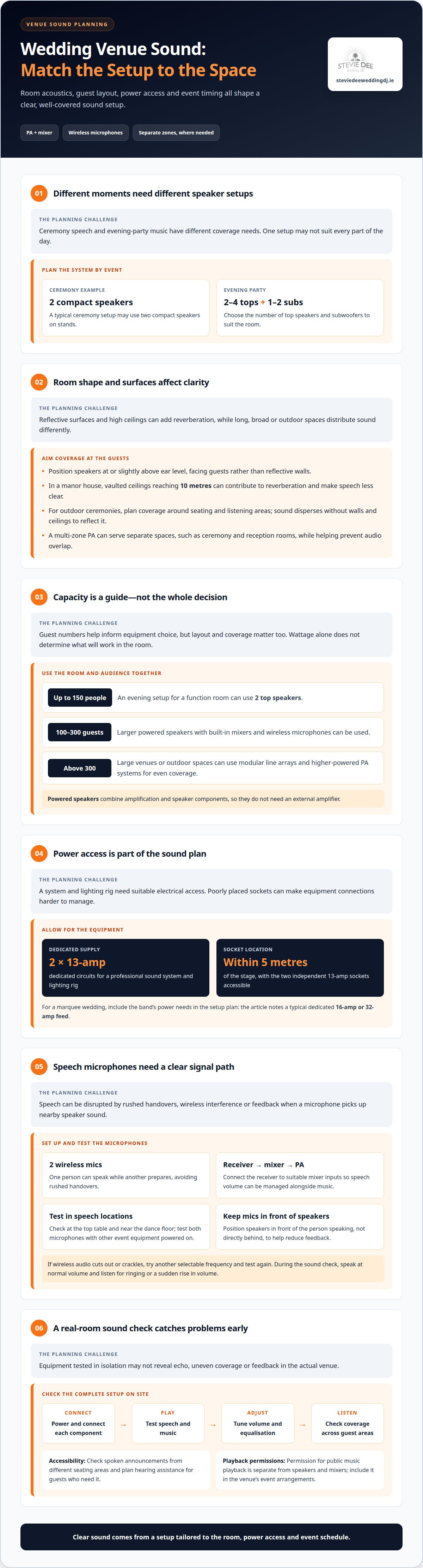
The sound system requirements for a wedding venue go beyond speakers: a typical setup includes a PA and mixer, wireless microphones, and separate audio zones where needed. For the evening party, plan for 2-4 top speakers and 1-2 subwoofers, depending on the room, plus two dedicated 13-amp circuits with sockets within 5 metres of the stage.
It’s easy to focus on how the music will sound, but power planning matters too. A setup suited to the room, with appropriate electrical access, helps keep the ceremony, speeches and dancing clear and connected.
This guide covers the equipment a wedding venue may need, how room size and layout affect the setup, and what to consider when planning microphones and power for a DJ or live band. It also explains how to prepare for different parts of the day so your celebration sounds as good as it feels.
Table of Contents
1. What equipment is needed for a wedding venue sound system?
A wedding sound system may include speakers, a PA, a mixer, microphones and suitable inputs for a DJ or live band. Ceremony and evening-party setups have different needs. A typical ceremony might use two compact speakers on stands, while an evening setup may use two to four top speakers and one or two subwoofers, depending on the room.
Room acoustics shape the design. In an Irish manor house, vaulted ceilings reaching 10 metres can contribute to reverberation, making speech less clear. Position speakers at or slightly above ear level, aimed towards guests rather than reflective walls. A multi-zone PA can serve separate areas, such as the ceremony room and reception space, while helping prevent audio overlap.
Outdoor acoustics differ from indoor acoustics. Without walls and ceilings to reflect sound, audio disperses into open space. Plan speaker coverage around the seating and listening areas, rather than directing sound towards empty grounds. A garden ceremony and an indoor dinner, for example, may need separate speaker positions and individual volume adjustments.
Capacity helps guide the equipment choice, but room layout matters too. For a function room of up to 150 people, an evening setup can use two top speakers. Venues for 100 to 300 guests can use larger powered speakers with built-in mixers and wireless microphones. Powered speakers combine amplification and speaker components, so they don’t need an external amplifier. Choose coverage for the room, not a wattage figure alone.
Test the system on site by connecting and powering each component, playing speech and music, then adjusting volume and equalisation. This can reveal echo, uneven coverage and feedback before guests arrive. Sound system requirements for a wedding venue depend on its ceiling height, surfaces, layout and event schedule.
Recorded-music permissions are separate from sound equipment. Include permission for public playback in the venue’s event arrangements. Speakers and mixers do not provide that permission.
For accessibility, plan clear speech amplification across guest seating and hearing assistance for guests who need it. Test spoken announcements from different seating areas, not only beside the mixer.
Hire or installation costs depend on the equipment, room layout and whether coverage includes the ceremony, speeches and party. Stevie Dee Wedding DJ pricing is provided after a quote request.
2. What is the benefit of having a specialist sound system?
A specialist plans power, placement and sound checks as one setup. For a professional sound system and lighting rig, allow two dedicated 13-amp circuits. The two independent 13-amp sockets should sit within 5 metres of the stage. This helps keep equipment connections practical and gives the sound team a clear starting point.
Venue layout shapes speaker placement. A long reception room, for example, may need speakers aimed along its length, while a broad room needs sound spread more evenly. Position speakers at or slightly above ear level, facing the audience. This directs audio towards guests rather than walls and helps reduce uneven volume across the room.
Large spaces need a different approach from compact function rooms. Venues above 300 guests, or large outdoor venues, can use modular line array speakers and higher-powered PA systems for even coverage. Larger venues may also use integrated ceiling or wall speakers. Separate controls can provide different audio in indoor and outdoor areas, helping prevent overlap and balance volume.
A professional sound check tests the actual room, not just equipment in isolation. Power and connect every component, then play speech and music. Adjust volume and equalisation for clear, balanced audio throughout guest areas. A sound team arriving early can complete setup and testing before the reception begins. An audio technician can also reduce setup time and help keep the system operating reliably.
Build sound checks into the event plan, especially when the room changes between ceremony and reception. A system test after installation can reveal coverage gaps before guests arrive. A tailored venue sound setup can account for the room layout, power access and lighting needs.
3. Wireless microphones for speeches and announcements
Plan for two wireless microphones so speeches and announcements can move smoothly between speakers. One person can hold a microphone while another prepares, avoiding rushed handovers during the reception. Connect the wireless receiver to suitable mixer inputs, then route its signal through the PA. This lets the sound operator control speech volume alongside music levels.
Before guests arrive, switch on each microphone and test it where speeches will happen, such as at the top table and near the dance floor. Check that the receiver sends a clear signal to the mixer and that speech reaches the room evenly. Keep a spare microphone ready as part of the two-microphone setup.
Wireless systems with multiple selectable frequencies can help avoid interference from nearby wireless equipment. Select a clear frequency for the venue, then test both microphones with other event equipment powered on. This matters in reception spaces where other wireless systems may be operating nearby. If the audio cuts out or crackles during the test, select another frequency and test again.
Reduce feedback by keeping microphones a safe distance from speakers. Feedback can begin when a live microphone picks up sound from a nearby speaker and sends it through the PA again. Place speakers in front of the person speaking, not directly behind them. During the sound check, speak into each microphone at normal volume and listen for ringing or a sudden rise in volume.
Give speakers a simple handover plan: switch on the microphone, hold it close enough for clear speech, and pass it securely after each toast. The technical operator can manage mixer levels and mute unused channels between speeches. These practical steps help keep announcements clear across different spaces without letting microphone noise interrupt the celebration.
4. Band power and electrical requirements
Band power needs deserve attention before a marquee or outdoor reception takes shape. In Ireland, a marquee band typically needs a dedicated 16-amp or 32-amp power feed. This is separate from choosing speakers: the feed must support the band’s electrical demands, while the sound system handles audio. Include the power arrangement when planning the stage, equipment positions and cable routes.
For venues with capacity up to 100 guests, portable PA systems or compact powered speakers with moderate wattage can generally suit the setup. Outdoor venues with limited electrical access can use battery-powered speakers to keep audio running. That option can cover ceremony or background music, while a band’s requirements still call for suitable power at its performance area.
Sound limiters also affect a band’s volume. Irish venues commonly set them between 90 and 95 dB. A 95 dB limiter is generally manageable for a wedding band, while a limit closer to 85 dB should be communicated to the band immediately. A limiter can cut amplifier power when sound exceeds its preset level for more than a few seconds, so sudden drops may affect a performance.
Map the stage and power points together. Keep the band’s equipment close to its dedicated power supply, and plan cable routes that avoid guest walkways. Before the event, establish where the power comes from and how the limiter affects the performance area. During setup, connect and power the equipment, then test the sound at performance volume. This helps identify power or volume issues before guests arrive.
A clear power plan helps the band and venue team coordinate their setup. For a wedding sound and lighting plan shaped around the venue, discuss your event setup.
Stevie Dee Wedding DJ: Full Night Wedding DJ
Stevie Dee Wedding DJ brings music and hosting together with its Full Night Wedding DJ and MC service. It’s a natural fit when you want the music to carry from the evening’s first moments through to the final song, with a bespoke sound and lighting setup tailored to your venue.
Share the shape of your day, from the room layout to the moments that matter most. A coordinated plan connects technical decisions with the atmosphere you want, whether that means a lively dance floor, clear announcements or smooth transitions between them. Stevie Dee also offers a Professional MC Service for hosting and announcements.
Planning a wedding abroad? A Destination Wedding DJ service offers another way to bring your entertainment plans together. For a celebration in Ireland or overseas, contact Stevie Dee Wedding DJ to discuss your wedding plans.
Shape the sound around your celebration
Turn the technical plan into an experience that feels like yours. Consider the mood you want guests to carry from the ceremony into the evening, and how music and hosting can support each moment. Sound system requirements for a wedding venue are most useful when they serve that bigger picture, not just the equipment list.
Stevie Dee Wedding DJ brings entertainment and event details together through its Full Night Wedding DJ service, Destination Wedding DJ service and Wedding Celebrant Service. Choose the fit that reflects your plans, whether you’re celebrating in Ireland or planning a wedding abroad. Share your venue and the atmosphere you have in mind to get a quote.
Contact Stevie Dee Wedding DJ to discuss your celebration and explore the right option for your day. Your plans can come together with confidence, clarity and plenty of room for a brilliant party.
Frequently Asked Questions
What equipment is needed for a wedding venue sound system?
A wedding venue sound setup typically needs quality speakers, a PA with suitable outputs, a mixer, and wireless microphones. The mixer connects music sources and microphones, then routes audio to the required areas. For example, a small indoor wedding with fewer than 30 guests may use a decent Bluetooth speaker for background music, while speeches and dancing call for a fuller PA setup.
What is the benefit of having a specialist sound system?
A bespoke setup can suit the venue’s layout and the different moments in the day. A ceremony room and reception space, for example, may need separate audio controls so music in one area doesn’t disrupt announcements in another. Testing the connected system in the actual rooms can also reveal uneven coverage before guests arrive.
What sound system equipment does a wedding venue need for speeches and music?
For speeches and music, plan for wireless microphones, mixer inputs and speakers connected to the PA. Separate mixer channels let the operator adjust speech and music independently, such as lowering background music during a toast. If a DJ or live band is part of the programme, include their audio connection in the system plan to help avoid interruptions during the changeover.
What sound system setup is needed for indoor and outdoor wedding venues?
Indoor rooms reflect sound from walls and ceilings, while outdoor spaces lack those boundaries. A garden ceremony, for example, may need speakers aimed towards the seating rather than across open grounds. For events using both indoor and outdoor spaces, multi-zone output can provide separate audio and volume control, helping keep each area comfortable and reducing sound overlap.
What sound limits and noise regulations apply to wedding venues in Ireland?
Irish wedding venues commonly set sound limiters between 90 and 95 dB. Treat this as a venue setting, not a universal legal threshold for every event. A limiter may cut amplifier power if sound stays above its preset level for more than a few seconds. If the venue’s limit is closer to 85 dB, tell the band promptly.
How should speakers be positioned to ensure clear sound and avoid feedback?
Position speakers at or slightly above ear level, aimed towards the audience. Keep speech microphones a safe distance from speakers, and avoid placing a speaker directly behind someone using a microphone. During the sound check, test from different guest areas and listen for ringing, sudden volume changes or patchy speech. Adjust the setup before the room fills.
Comments