
Wedding Production: What Equipment, Setup and Service Include
Wedding production is the technical backbone that helps each part of the day look and sound its best. To understand what wedding production includes, consider the sound, ceremony and speech audio, lighting, staging, and the practical work of delivering, setting up, and dismantling equipment. The right mix depends on the venue, schedule, and atmosphere you want to create.
It’s easy to picture the music and lights, but production also involves coordinating those elements as the day moves from vows to reception and dancing. Clear sound helps guests follow the ceremony and speeches, while thoughtful lighting can shift the mood from intimate to energetic without taking over the room.
This guide explains what sits within wedding production, which equipment may be involved, and how delivery, setup and breakdown fit into the overall plan. You’ll come away with a clearer picture of the technical details behind a seamless celebration, and how they can support the experience you want for you and your guests.
Table of Contents
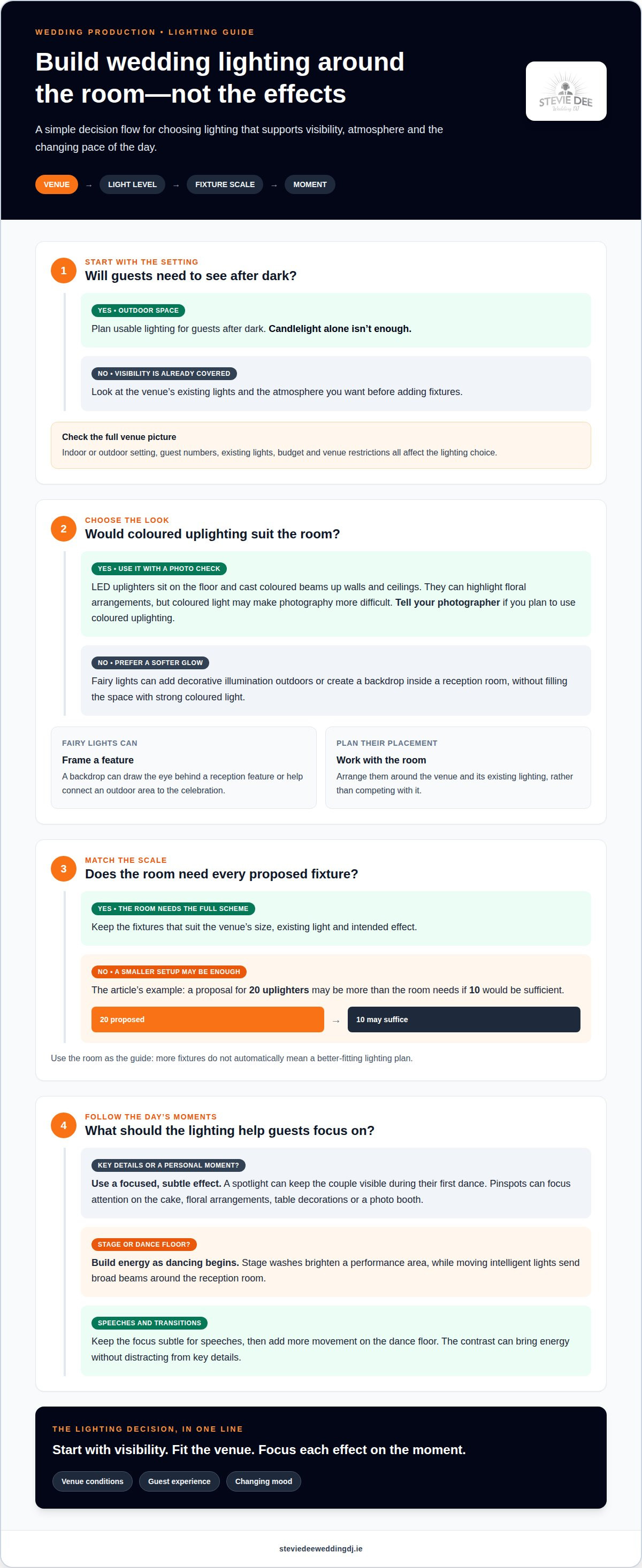
Lighting for visibility, ambience and dancing
Wedding lighting needs to do more than create a striking atmosphere. The right choices help guests move comfortably, enjoy key moments, and feel the energy build as the day unfolds.
Lighting Choices and Venue Considerations
Lighting choices depend on whether the venue is indoors or outdoors, the guest numbers, existing lights, budget, and venue restrictions. These details matter: a scheme that suits a bright reception room may not provide enough visibility outdoors after dark.
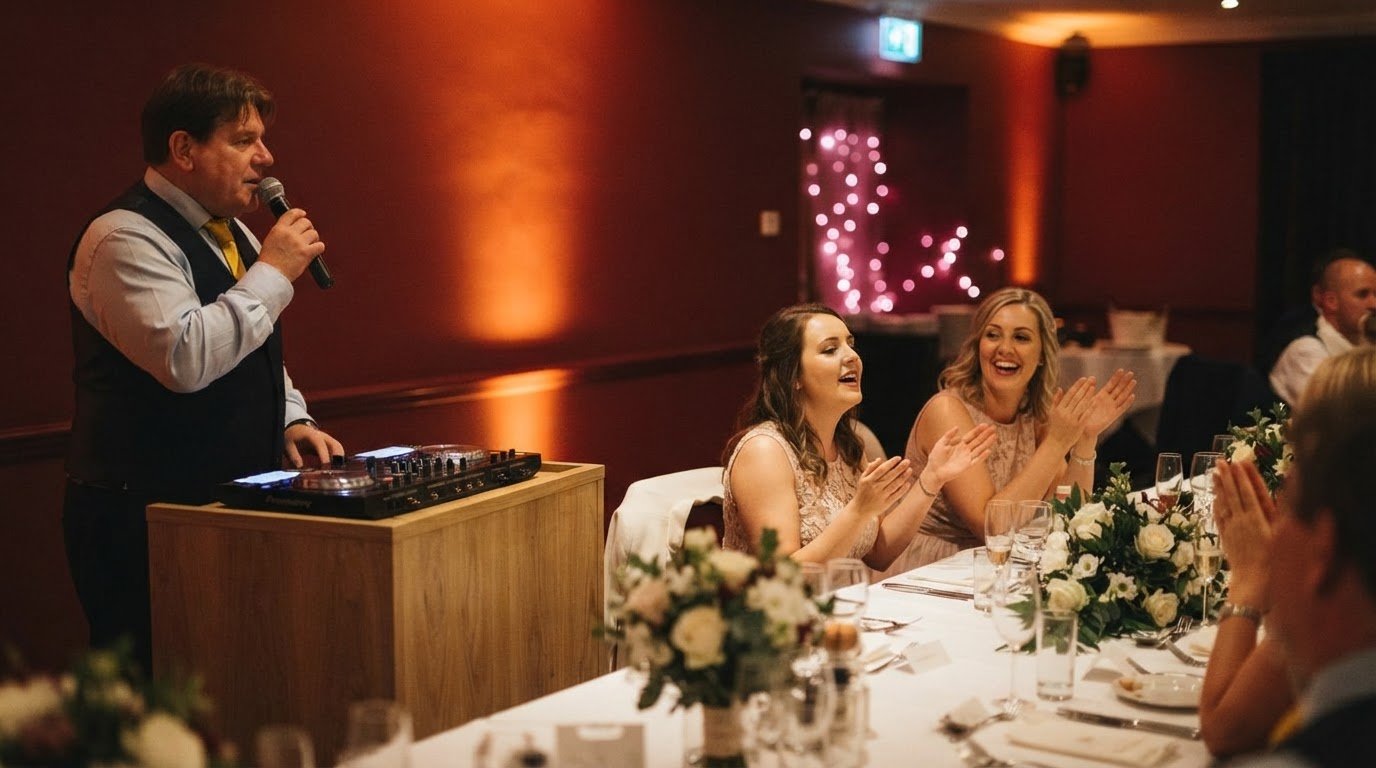
LED uplighters sit on the floor and cast coloured beams up walls and ceilings. They can highlight floral arrangements, but coloured light may make photography more difficult. If you plan to use coloured uplighting, let your photographer know so they can account for it; wedding visual specialists such as shutterink.in often highlight the importance of aligning production lighting with camera requirements to capture every moment clearly.
Consider scale before adding fixtures: a proposal for 20 uplighters may be more than the room needs if 10 would be sufficient. For outdoor spaces, plan lighting guests can use to see after dark; candlelight alone isn’t enough.
Fairy Lights and Mood Lighting
Fairy lights provide decorative illumination outdoors or create a backdrop inside a reception room. Their softer glow can add atmosphere around a dining area or frame a feature without filling the space with strong coloured light.
Think about what you want guests to notice. A fairy-light backdrop can draw the eye behind a reception feature, while carefully placed lights can make an outdoor area feel connected to the celebration. Plan the layout around the venue and its existing lighting, rather than competing with them.
Stage and Dance-Floor Lighting
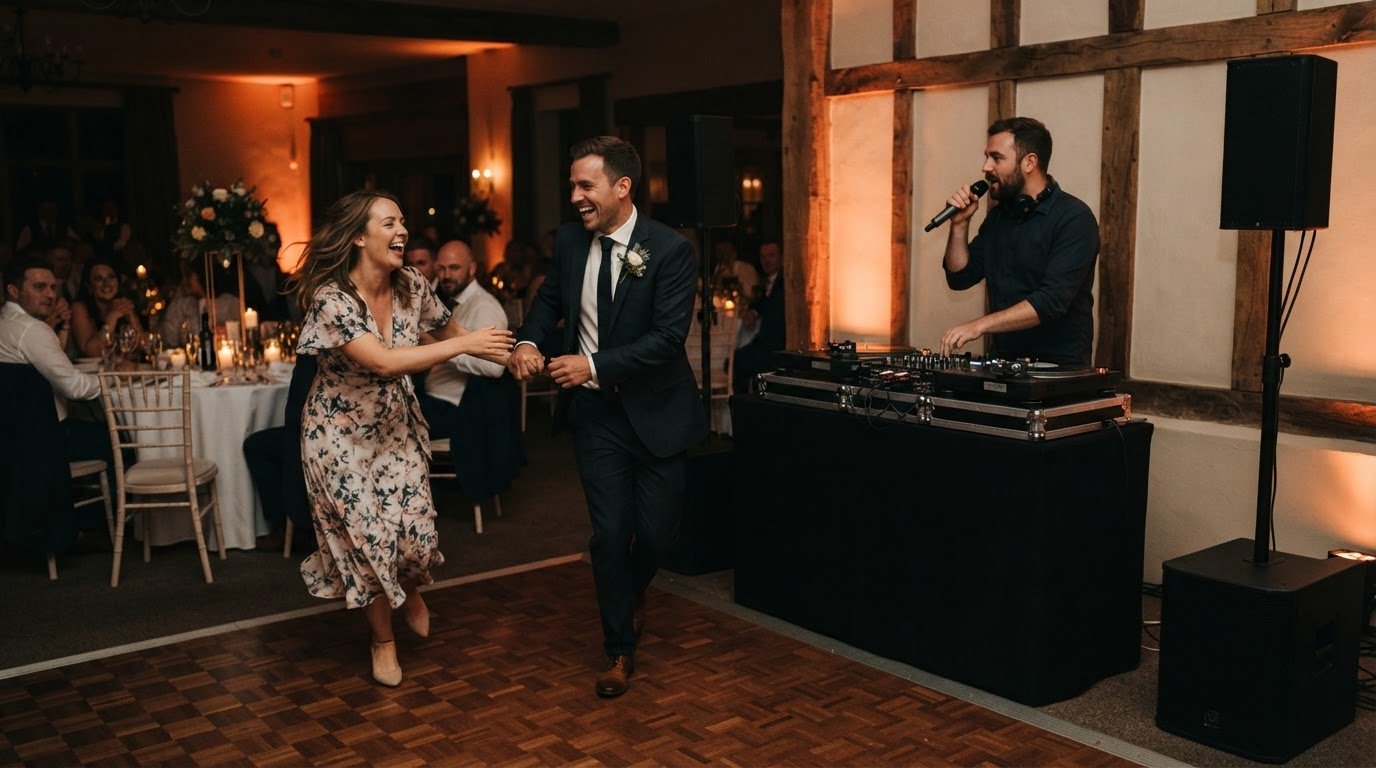
Stage washes brighten a performance area, while moving intelligent lights send broad beams around the reception room. Together, these effects can bring the stage to life and build energy as dancing begins.
For a personal moment, a spotlight can keep the couple visible during their first dance. Pinspots focus attention on details such as the cake, floral arrangements, table decorations, or a photo booth. Match the effect to the moment: use a subtle focus for speeches, then add more movement on the dance floor. This contrast brings energy without distracting from the celebration’s key details.
Delivery, setup and breakdown of wedding items
Production involves more than equipment arriving at the venue. Delivery, installation, and collection need to fit the wedding schedule, venue access arrangements, and spaces in use. Ceremony sound, for example, may need to be ready before guests arrive, while reception equipment may be installed separately during a room turnaround.
Before booking, establish what each supplier includes: delivery, setup, event coverage, dismantling, and collection. Ask which equipment or items are included, how the service works across different spaces, what you’ll receive, and when. These details help distinguish equipment delivery from installing and operating it.
Timing matters. The production team needs enough staff to finish setup on schedule and people assigned to dismantle the equipment afterwards. Agreeing on access times and installation order helps coordinate the production crew with venue staff, caterers, and other suppliers. A late setup can affect room access, rehearsals, or the transition from ceremony to reception.
For an indoor reception, coordinate equipment installation with table setup and any room reveal.
For an outdoor wedding, plan how equipment reaches the ceremony area and how the schedule responds to a weather change.
For multiple spaces, map which items are needed in each location and when they must be moved or reset.
Think through the full day, from the ceremony to canapé hour, dinner, and the dance floor. A production schedule should show when each area is needed, so room changes don’t clash with guest movements or supplier tasks. Include dismantling and collection in the timeline. Guests may still be leaving as equipment comes down, so agree when work can begin and which areas need to stay clear.
Clarifying each supplier’s arrangements for delivery, setup, and dismantling gives you a fuller view of the event plan. It also helps align separate supplier schedules, especially for outdoor locations or quick room turnarounds.
What wedding production includes
A practical answer to what wedding production includes is the technical and functional work that brings an event together. A production company may coordinate lighting, sound, staging, dance floors, power distribution, scenic elements, and technical management. While flowers, dresses, and table decorations usually fall under styling rather than pure technical production, event rental and decor specialists such as Events Master LLC show how functional staging and aesthetic decor frequently integrate to create a cohesive environment.
The production team helps these elements support the day’s flow, from the ceremony to speeches and dancing. For example, a microphone and PA system can help guests hear the vows, while a planned lighting transition can shift the room’s mood for the evening celebration.
In Ireland, permissions and insurance arrangements depend on the venue, equipment, and installation plan. Agree responsibilities with the venue and suppliers. Production guidance also calls for legally certified equipment and practices that comply with health and safety policies.
Production prices depend on the requirements and are provided after a quote request. Factors include the equipment and technical management needed, venue layout, number of spaces, schedule complexity, and requirements for delivery, setup, and dismantling.
Ask a production company which equipment and services are included, how coverage works across different spaces, who manages transitions, and what the schedule requires. For example, clarify how ceremony audio, speeches, and the opening of the dance floor fit into the plan.
Common risks include poor sound, power demands, weather changes at an outdoor ceremony, supplier delays, and tight room turnarounds. Discuss power load, safe distribution, and contingency plans. A detailed event schedule helps the production team coordinate changes and keep technical work unobtrusive to guests.
Production works best when the team coordinates with the venue, caterers, florists, photographers, and entertainment suppliers. For a complex wedding with multiple spaces or a marquee, early collaboration can uncover logistical clashes before they affect the celebration. In short, production is the connected technical plan, equipment, and on-site coordination that helps each part of the day work as intended.
What audio, lighting, staging, and AV equipment does wedding production include?
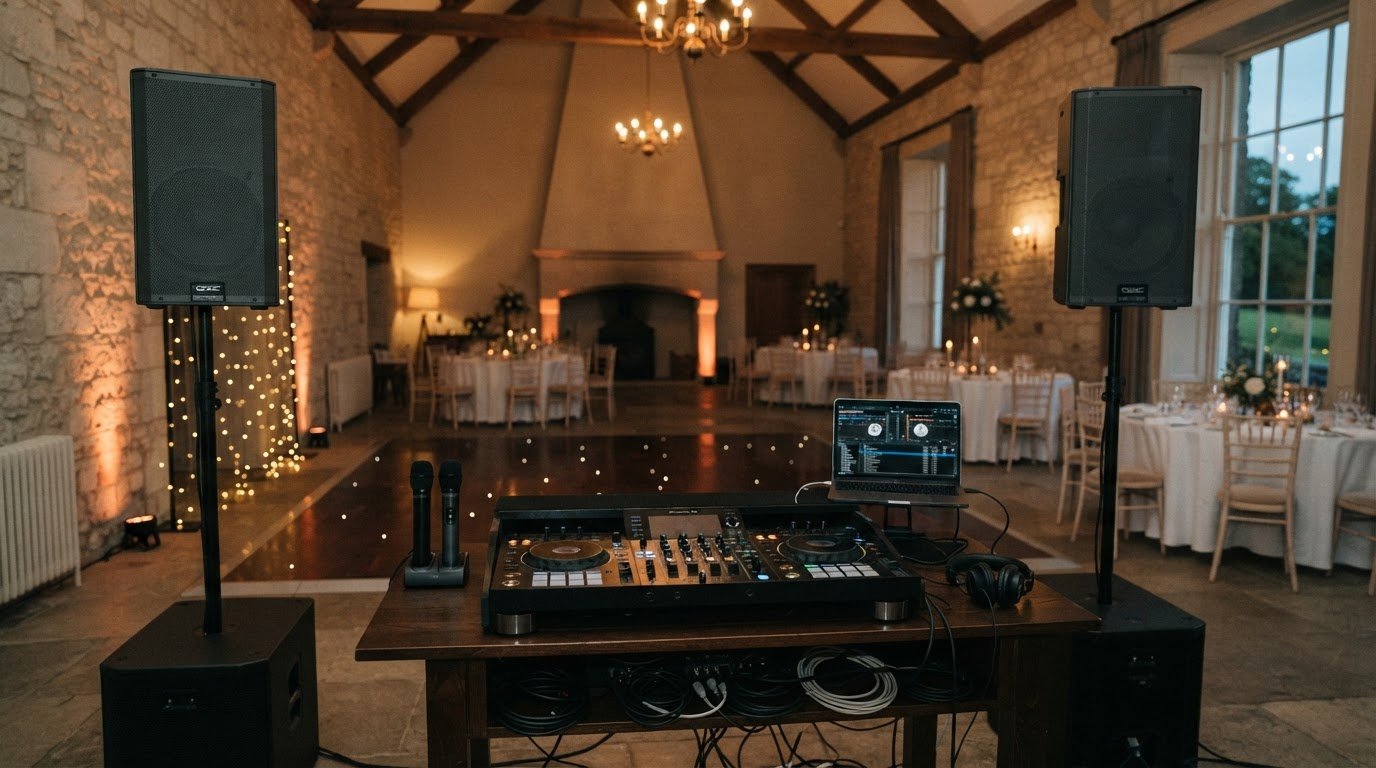
Ceremony sound equipment may include wireless radio microphones, a PA system, amplifiers, and a mixing desk. These components help carry vows and readings to guests across the room. One venue may have a basic PA, while another ceremony setup may need its own system. The equipment plan depends on the room and the spoken parts of the schedule.
Speeches need clear sound coverage too. A PA system with stage monitors can help speakers hear themselves, while a mixing desk lets the sound operator manage audio levels. Professional audio recording can preserve vows, speeches, laughter, and reactions more clearly than relying only on camera sound. It gives the couple a useful record of moments that might otherwise be hard to hear again.
Staging can include a platform for a DJ or live band, or a raised area for the couple and top table. Design details may include draping, backdrops, carpet colours, and tiered platforms. Each choice affects how the stage fits into the room, so its dimensions and position should suit the layout and intended use.
Lighting and AV can shape how guests experience each part of the evening. A lighting transition can shift the room from a calm ceremony mood to a livelier dance-floor atmosphere. A gobo is a stencil placed in front of a light source to project a pattern or image, adding a distinct visual detail to a wall or floor. The effect should support the celebration, not compete with it.
For a coherent setup, connect the equipment plan to the schedule: ceremony audio, speeches, entertainment and the dance floor each have different needs. If you want sound and lighting tailored together, explore bespoke lighting and sound setup for your wedding.
Stevie Dee Wedding DJ: Full Night Wedding DJ
Stevie Dee Wedding DJ brings the entertainment plan into focus with a Full Night Wedding DJ service. Choose this option when you want music to carry the celebration from the reception into the evening dancing, with bespoke lighting and sound tailored to the venue.
For a wider role on the day, a Professional MC Service can support announcements and transitions, while a Wedding Celebrant Service covers the ceremony. Couples planning a celebration abroad can also choose the Destination Wedding DJ service. Each option serves a different purpose, so decide whether you need music, hosting, ceremony support, or destination entertainment.
Explore the service that best fits your wedding plans, then visit steviedeeweddingdj.ie to get in touch.
Shape the celebration you want
Now that you understand what wedding production includes, choose the atmosphere and guest experience you want to create. Consider how music and hosting can connect the ceremony, reception, and evening, then make those priorities part of your entertainment plan.
Stevie Dee Wedding DJ offers a Full Night Wedding DJ service for couples planning their evening celebration, a Destination Wedding DJ service for weddings abroad, and a Wedding Celebrant Service for the ceremony. These options can bring entertainment and meaningful moments together in one considered plan.
Share your vision, venue and schedule with Stevie Dee Wedding DJ to explore which service fits your plans. Contact Stevie Dee Wedding DJ to start a conversation about your wedding. Your celebration should feel unmistakably yours, and thoughtful planning can help set that tone from the very first moment.
Frequently Asked Questions
What is meant by wedding production?
Wedding production is the planning and coordination of the technical elements that help an event run as intended. It connects equipment, room layout, and the day’s schedule, rather than covering every decorative choice. For example, a ceremony plan might coordinate the sound equipment’s position with the celebrant’s location and guest seating, so the technical setup supports the proceedings.
How Does Production Improve Guest Experience?
Production can make the day easier to follow and more comfortable for guests. Clear announcements help people understand what happens next, while well-planned transitions reduce pauses between moments. As guests move from dinner into the evening celebration, coordinated sound and lighting can signal a change in mood, making the transition feel intentional rather than abrupt.
What services are included in wedding production?
Wedding production services can cover technical planning, equipment, installation, and on-the-day management, with the scope set out for each event. Entertainment and hosting may sit alongside production, but they are distinct roles: a DJ selects and plays music, while an MC makes announcements and helps guide proceedings. A written scope helps couples understand which responsibilities belong to each service.
How does wedding production vary by venue and guest count?
Venue layout and guest numbers influence how sound and lighting need to reach the room. A long dining space, for instance, may need a different audio arrangement from a compact reception room. A venue with an existing PA also presents a different starting point from a marquee or blank-canvas space, where more technical elements may need planning.
What is the process for planning and delivering wedding production?
Planning usually starts by mapping the venue, schedule, and event priorities, then matching the production plan to those needs. The couple, venue, and suppliers can agree on responsibilities and timing before the day. A shared event schedule helps everyone understand key transitions, such as when speeches begin or the reception turns into dancing, and reduces confusion between teams.
Comments