
How to Write Vows That Fit Your Irish Wedding Ceremony
Your wedding vows should take no more than two minutes to deliver, and around one minute is a strong target. If you’re writing your own wedding vows in Ireland, start a few weeks before the ceremony so you have time to find the right words, shape your promises and practise saying them aloud.
It’s natural to want your vows to capture everything you feel. They don’t have to: a few personal details and promises that ring true can make the moment deeply meaningful without making your vows too long. Giving yourself time to write can make all the difference.
This guide explains when to begin, how to keep your vows focused and how to draw inspiration from memories, songs, books or poems. You’ll also learn why your ceremony type matters, what to discuss with your celebrant and how to feel prepared when it’s time to speak. The aim is vows that feel heartfelt, personal and comfortable to deliver.
Table of Contents
Checking with your celebrant before writing personal vows
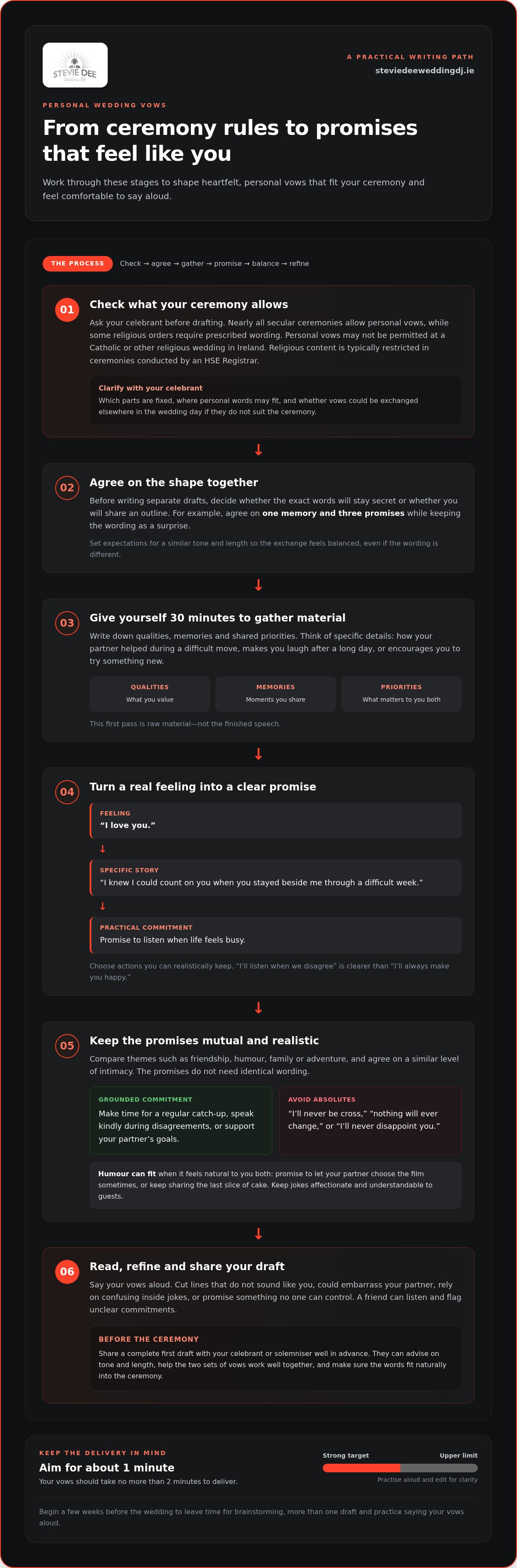
Before you start drafting, ask your celebrant whether personalised vows suit your ceremony. Nearly all secular ceremonies allow couples to include personal vows, while some religious orders require prescribed wording. Personal vows may not be permitted at a Catholic or other religious wedding in Ireland. Ceremony format matters too: religious content is typically restricted in ceremonies conducted by an HSE Registrar. Your celebrant can explain which parts are fixed and where personal words may fit.
Share a complete first draft with your celebrant or solemniser well before the ceremony, while there’s time to make changes. They can advise on tone and length, and help ensure both partners’ vows work well together. For example, if one person’s vows are serious and the other’s are playful, you can adjust the balance. This also gives your celebrant time to help your words fit naturally into the ceremony.
Before writing separate drafts, agree with your partner on the general shape of your vows. Decide whether to keep the wording secret until the ceremony or share an outline, such as one memory and three promises. You can preserve the exact words as a surprise while agreeing on a similar tone and length. This helps the exchange feel balanced, rather than leaving one person with a much longer or more formal speech.
Build each vow around genuine feelings, a specific story and promises you can realistically keep. Tell your partner you love them, then connect that feeling to a moment: “I knew I could count on you when you stayed beside me through a difficult week.” Follow with a clear commitment, such as listening when life feels busy. Avoid absolute promises like “I’ll never disappoint you,” which no one can control, and choose practical commitments instead.
Leave out anything that could embarrass your partner or distract guests from your promises. Avoid private stories that might make someone uncomfortable, inside jokes that leave guests confused and promises based on impossible certainty. Read your vows aloud and cut sentences that don’t sound like you. If personal vows don’t suit the ceremony, ask whether you can exchange them at another point in the wedding day, such as during the drinks reception or speeches.
Choosing promises and themes to emphasise
Start with what makes your relationship distinct, then turn those details into promises you can live by. A focused list will help your vows feel personal, balanced and clear when spoken aloud.
Set aside thirty minutes to brainstorm qualities, memories and shared priorities. Write down details such as how your partner helped during a difficult move, makes you laugh after a long day, or encourages you to try something new. Choose themes that genuinely matter to both of you, rather than copying a strict list of what wedding vows should contain. This first pass is raw material, not the finished speech.
Make specific long-term promisesChoose promises that describe how you want to treat your partner through ordinary days and major changes. “I’ll listen when we disagree” is clearer than “I’ll always make you happy,” because it names an action you can take. Check that each promise reflects your relationship and still makes sense beyond the wedding day. Avoid impressive-sounding words that leave you unsure what you’re committing to.
Keep promises realisticMake promises you can keep honestly, even during stressful or difficult seasons. You might promise to make time for a regular catch-up, speak kindly during disagreements or support your partner’s goals. Avoid absolutes such as “I’ll never be cross” or “nothing will ever change.” A realistic promise recognises that life changes while expressing how you intend to show up for each other.
Make the exchange feel mutual, even if you write your vows separately. Compare the themes you want to include, such as friendship, humour, family or adventure, and agree on a similar level of intimacy. You might each promise to protect time together or encourage one another’s ambitions. The wording doesn’t need to match. Shared expectations help both partners feel that their vows belong in the same ceremony.
If humour feels natural to you both, add a playful promise between heartfelt commitments. You might promise to let your partner choose the film sometimes or keep sharing the last slice of cake. Make sure the joke is affectionate and understandable to guests. Read the full vows aloud: humour should add warmth, not undermine a promise or reveal a private story your partner would rather keep private.
Review each line by asking what it says about your relationship and what action it promises. Replace broad phrases with details only you could write, then remove promises that feel performative or too rigid. A friend can listen to your draft and flag commitments that sound unclear. Keep the final version focused on love, specific intentions and the life you’re choosing to build together.
Finding inspiration in songs, books and poems
Gather inspiration from words, places and memories that already mean something to you. Use them as a starting point, then shape your vows around your own relationship.
Choose a song, book or poem that brings a shared memory to mind. Perhaps a song takes you back to a road trip across Ireland, or a line from a favourite novel captures how your partner makes you feel. Write down what the reference means to you, not just what it says. That meaning can help you turn inspiration into words that feel personal.
Borrow a few lines only if they express something you genuinely want to say. A poem by W.B. Yeats might capture a feeling beautifully, but your vows should still include a promise of your own. Note the source and pair the borrowed words with a memory or commitment. That way, the reference supports your message instead of making the whole speech sound as if someone else wrote it.
Use sample vows as prompts, not as a script to copy. Notice the parts that feel natural, such as a loving opening, a specific memory or a closing promise. Then replace generic phrases with details from your own life: the friend who became your partner, a small ritual you share or a moment when you felt understood. Your draft should sound like you speaking directly to someone you love.
Look to the Irish landscape for images that connect with your relationship. If you remember a quiet walk in Connemara, describe the weather, the view and what your partner said. If you’re drawn to the coast, the changing Atlantic might represent facing life’s changes together. Choose a real place and memory instead of adding scenery simply because it sounds beautiful.
Consider including Irish words if they matter to you or your families. The phrase “Grá geal mo chroí” means “the shining light of my heart.” You could say a short phrase in Irish or include a translation in the ceremony programme so guests understand its meaning. Choose words you understand and can say with care; genuine feeling matters more than showing off a language.
Read each reference aloud and ask whether it still sounds like you. A lyric, poem or landscape image should lead back to your partner, your happiness and the life you’re building together. If a beautiful line feels forced, leave it out. Keep what reminds you why you’re getting married, then make the promises around it your own.
Recommended vow length
Include a declaration of love, a personal detail and promises you mean to keep. Aim for about a minute, keep your vows to no more than two minutes, and practise aloud before the ceremony.
Choose your target length before editing. A useful guide is roughly 150 to 250 words for personal vows; at about 130 words per minute, that takes around one to two minutes to deliver. One minute is an ideal target, while two minutes is the recommended maximum. Your speaking pace and emotional pauses affect the timing, so read the draft aloud rather than relying on a word count alone.
Remember that length depends on the ceremony and the words being spoken. Catholic Church wedding vows are around 45 words long, while personal vows give couples room to express their relationship in their own words. A typical vow reading can last between 30 seconds and three minutes, but keeping yours to one or two minutes helps the moment stay focused.
Shape your vows around three clear elements: tell your partner you love them, share a brief personal memory and make promises for your life together. For example, mention a time they supported you, then promise to keep listening and making time for each other. These details make your vows personal without turning them into a full speech about your relationship.
Draft freely, then edit for speaking aloud. Remove repeated ideas, long explanations and details better suited to a later speech. Keep one vivid example instead of listing every milestone. Read the words aloud and mark natural pauses. If a sentence makes you rush or lose your place, shorten it. This edit preserves the meaning while making your vows easier to deliver.
Practise with the page or card you’ll use during the ceremony. Read your draft aloud to yourself, then ask someone you trust to listen and flag awkward phrases. You don’t need to memorise your vows. A printed copy lets you pause, breathe and find your place if the moment feels emotional.
Leave room for the ceremony’s formal wording. In a legal Irish ceremony, personal promises sit alongside formal marriage vows; couples can exchange personal vows after making the legal vow. Keep the two parts distinct in your draft, so your personal words add meaning without obscuring the required declarations.
When to start writing wedding vows
Begin a few weeks before the wedding, not in the final rush. This gives you time to collect ideas, draft, pause and revise. Schedule a writing session separately from seating plans or supplier calls. If writing feels daunting, start with five phrases about what you admire in your partner. They’re a starting point, not a speech you need to finish straight away.
Use your first session to brainstorm memories and qualities without trying to make every line beautiful. Note moments such as a rainy walk, a difficult decision you faced together or a small act of kindness. Add what each memory says about your relationship. A page of honest details gives you more useful material than staring at a blank screen and demanding perfect wording.
Return to your notes in another session and choose the details that matter most. Pick one memory, the feeling it brings back and the promise you want to make. For example, remembering how your partner encouraged a career change could lead to a promise to support their ambitions. Keep other ideas nearby, but don’t try to fit every story into your vows.
Write a complete first draft before polishing individual phrases. Give yourself room to find a natural beginning, middle and ending. You might open by saying what you love about your partner, include a shared memory and finish with a commitment to married life. Writing the whole piece first helps you hear whether it sounds like you, rather than a collection of borrowed lines.
Leave the draft overnight, then read it again the next day. The pause makes repeated ideas, clumsy wording and insincere-sounding promises easier to spot. Read the phrases aloud: a sentence that looks lovely on screen may feel awkward when spoken. If your ceremony has a celebrant or solemniser, share a developed draft early enough to get useful feedback.
Plan a final practice before the wedding, using the printed page or card you intend to bring. Ask one trusted friend to listen and mark any confusing phrases. Keep the wording clear for guests, but don't rewrite your voice to impress them. If you’re arranging a ceremony alongside the celebration, explore wedding ceremony support as you bring the plans together.
Stevie Dee Wedding DJ: Full Night Wedding DJ
Stevie Dee Wedding DJ can bring the ceremony and celebration together through its Wedding Celebrant Service, Professional MC Service and Full Night Wedding DJ. If you’re still shaping your vows, a celebrant service is a natural fit for planning the ceremony; the MC and DJ services support the celebration that follows. The Full Night Wedding DJ is especially relevant when you want music to carry the reception into the evening, while a Professional MC Service helps guide the event’s announcements and transitions. For couples marrying abroad, Stevie Dee Wedding DJ also offers a Destination Wedding DJ service. Choose the support that matches the parts of your day you’re planning, then visit steviedeeweddingdj.ie to get in touch.
Make your words part of the celebration
Once your vows feel true to you, let them set the tone for a moment you share. For couples writing their own wedding vows in Ireland, the next step is to connect the words with the ceremony’s atmosphere and the celebration that follows. Think about how you want the day to feel as you speak: intimate, joyful, relaxed or full of energy. That picture can guide your choices for the ceremony and reception.
Stevie Dee Wedding DJ can support the celebration with a Wedding Celebrant Service, Destination Wedding DJ and Full Night Wedding DJ. If you’re ready to discuss how your ceremony and reception can flow together, contact Stevie Dee Wedding DJ.
Your vows don’t need to sound perfect to be powerful. Let them sound like you, speak with care and step into the day ready to celebrate the promises you’ve chosen together.
Frequently Asked Questions
How long should vows be?
Aim for about one minute, with two minutes as a practical maximum for spoken personal vows. A draft of roughly 150 to 250 words can help you plan, but your speaking pace and pauses affect delivery time. Read the vows aloud and time yourself. If they run long, keep the line that best expresses your commitment and remove repeated explanations or extra details.
What are the traditional wedding vow basics?
Traditional vows generally express love, commitment and a promise to share married life. The wording depends on the ceremony: a religious service, for example, may use prescribed vows, while personal words may be added where permitted. Think of the essentials as a clear commitment to your partner, expressed in language that fits your beliefs and ceremony, rather than a speech about every part of your relationship.
Where to start?
Start with a blank page and write three short lists: what you love about your partner, a memory that shows why and what you hope to promise. For example, note their patience, a time they supported you and your intention to make decisions as a team. For couples writing their own wedding vows in Ireland, ceremony style is also worth considering early.
How do you write personal wedding vows step by step?
First, gather memories and qualities that feel specific to your relationship. Choose a story and the feeling it brings back, then turn that feeling into a promise, such as making space for honest conversations. Draft an opening, the memory, your promises and a closing line. Read the draft aloud, cut repeated phrases and practise from the page you’ll use during the ceremony.
Can you write your own vows for a legal wedding ceremony in Ireland?
Yes. Personal vows can be included after the legal vows, provided they suit the ceremony format. They don’t replace the formal legal declarations. Both partners must verbally declare that there are no impediments to the marriage, then make the formal vow taking the other as their legal wife, husband or spouse. The solemniser handles the Marriage Registration Form as part of the legal arrangements.
What vows are legally required at an Irish civil wedding ceremony?
Both partners must declare that they know of no legal reason they cannot marry, then each must make the formal vow taking the other as their legal wife, husband or spouse. Section 51 of Ireland’s Civil Registration Act 2004 is the basis for the no-impediment declaration, often called the “151 Declaration.” Personal promises are separate from these formal words.
What are the rules for writing vows for a humanist or secular ceremony in Ireland?
Nearly all secular ceremonies allow personal vows, but ask your celebrant or solemniser how they fit the ceremony. Agree on the wording and order with your partner, then share your draft with the officiant so its tone and length work alongside the ceremony. For a legal ceremony, keep personal promises distinct from the required legal declarations.
What are examples of romantic, funny, or short wedding vows?
Romantic: “I’ll keep choosing you, listen with care and celebrate your joys.” Funny: “I promise to share the chips, even when I ordered them.” Short: “I love you, I trust you, and I’ll stand beside you.” Treat these as prompts, not scripts. Replace a line with a detail that belongs to you both, such as a shared habit, favourite place or familiar joke.
Comments