
How to Get the Party Started at Your Wedding With Music
Updated: 8 minutes ago
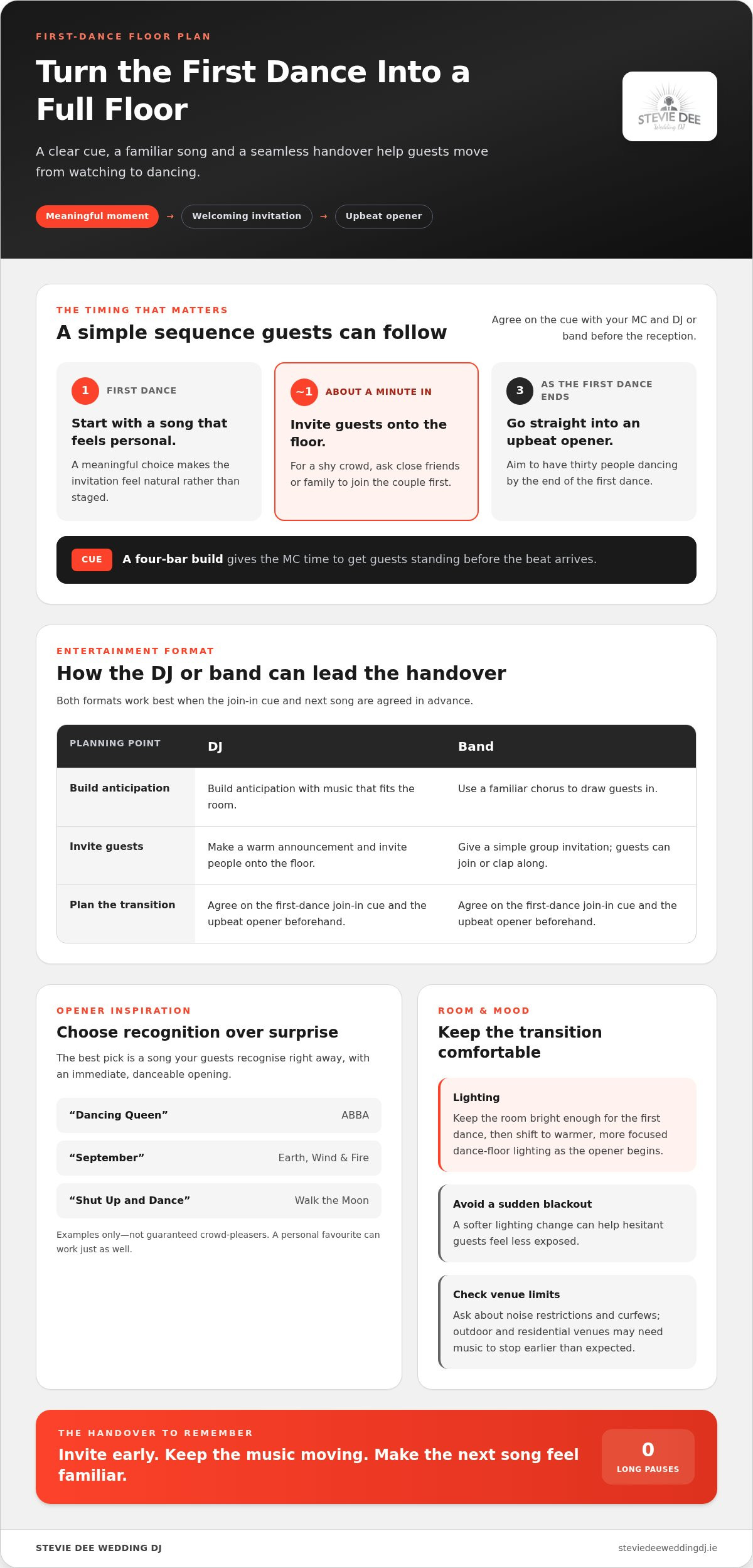
The quickest way to get the party started at a wedding is to move straight from the first dance into an upbeat, familiar song. Choose a track guests recognise from its first few notes, and use a brief musical build to give the MC time to invite people onto the floor. Invite guests to join about a minute into the first dance, so they’re ready to keep moving when the next song begins.
You want the dancing to feel natural, not like an empty floor waiting for someone to make the first move. A meaningful song, a playful group moment and a smooth handover between formalities can help guests feel part of the celebration.
This guide explains how to invite guests onto the floor, keep the evening moving, tailor entertainment to different guests and coordinate the music throughout the day. You’ll also find ideas for introducing music early, so the atmosphere builds well before the first dance.
Table of Contents
1. Getting guests onto the floor during the first dance
The best way to get guests dancing is with a clear invitation, a familiar song and no long pause. Choose the first-dance track, then agree with the MC and DJ on when guests should join. Invite them onto the floor about a minute into the song, so they’re already dancing when the next track begins. A meaningful song can make the invitation feel personal rather than staged.
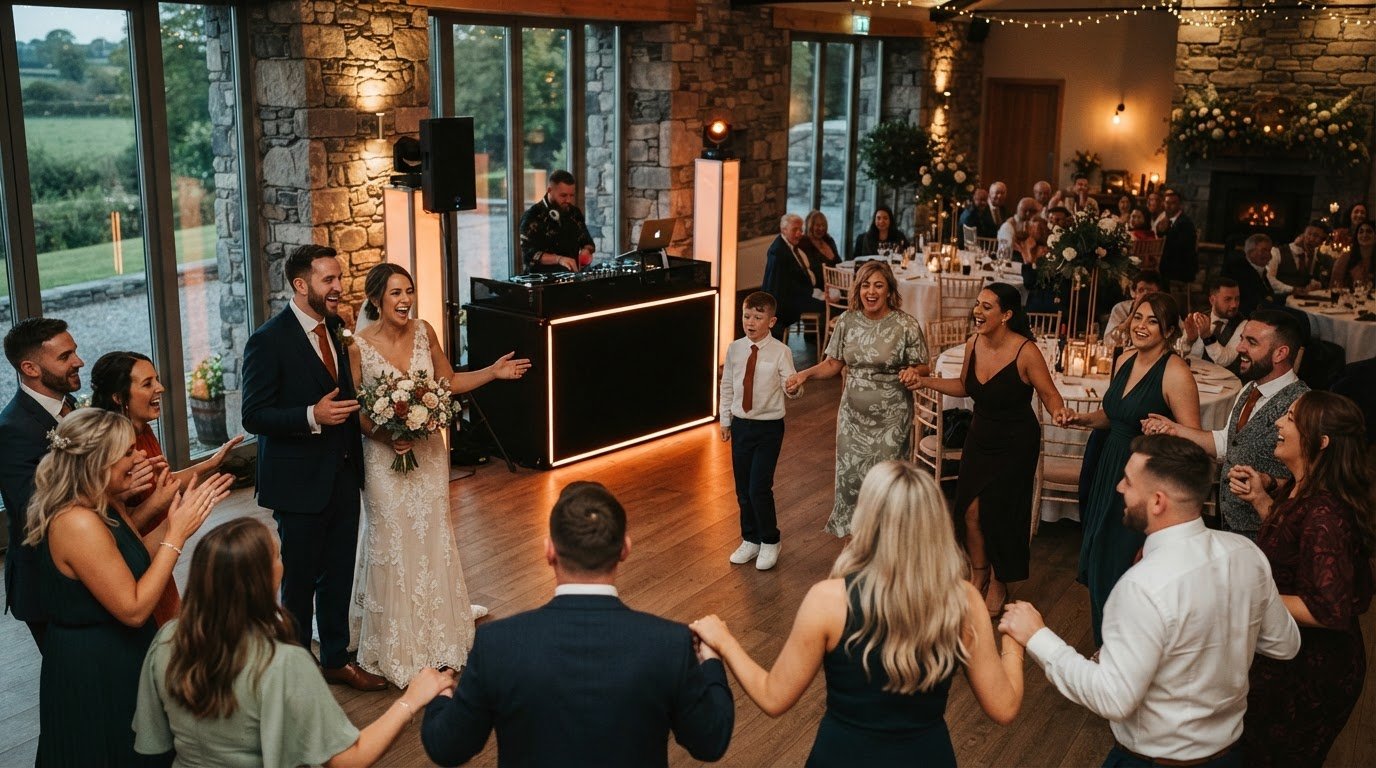
For a shy crowd, give guests an easy first step: ask close friends or family to join the couple. Aim to have thirty people dancing by the first dance’s end, then move straight into an upbeat opener. A group dance or playful entrance can break the ice, especially when guests recognise the steps or can simply clap along.
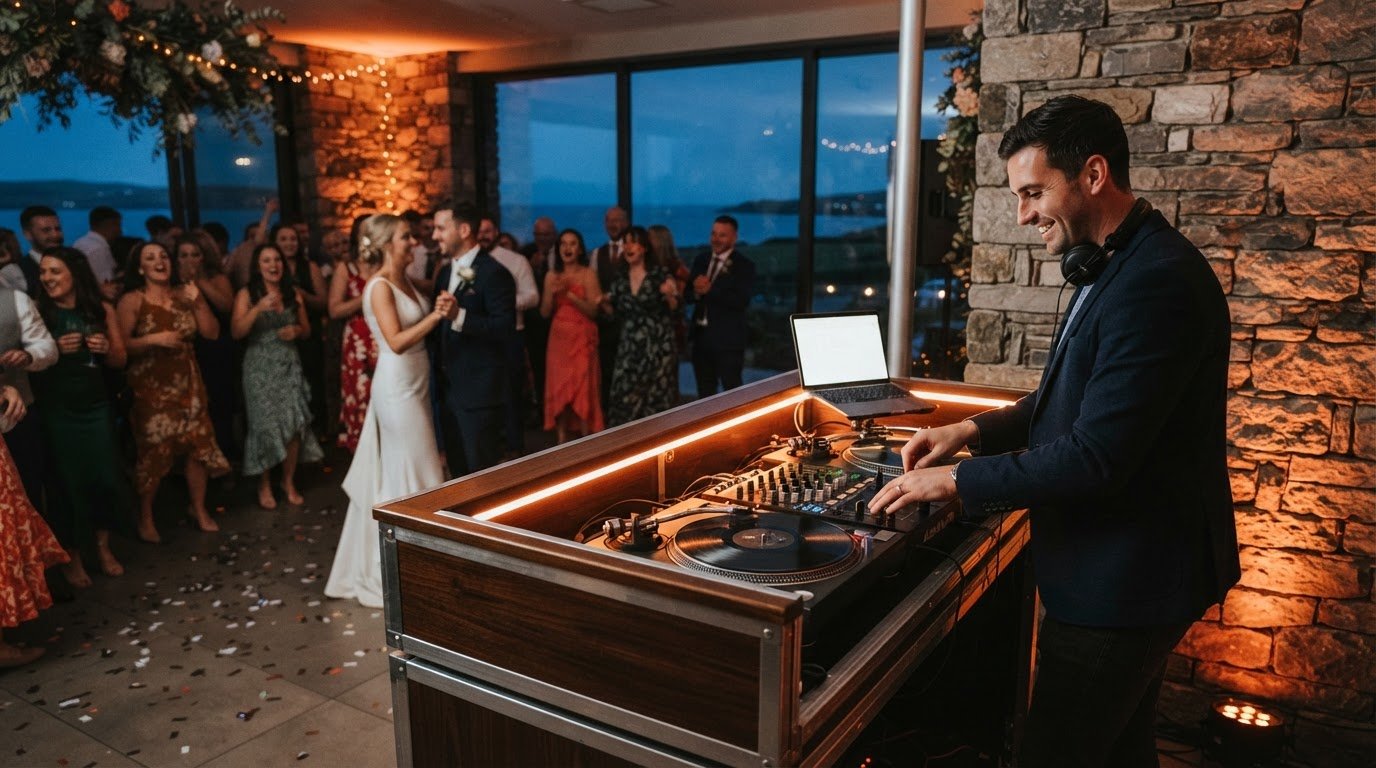
A DJ can encourage guests by building anticipation, making a warm announcement and choosing music that fits the room. A band can use a familiar chorus or a simple group invitation. For either format, agree on the first-dance join-in cue and the opener beforehand. A four-bar build gives the MC time to get guests standing before the beat arrives.
To make the couple’s entrance and first dance more exciting, connect them with one smooth sequence. Pick an entrance track that reflects your style, then transition into the first-dance song without a lengthy pause. You don’t need a formal first dance: start with a high-energy track instead, and invite guests to join immediately. Most couples spend about four minutes choosing an opener, so focus on recognisable music and a clear transition.
For opener ideas, consider “Dancing Queen” by ABBA, “September” by Earth, Wind & Fire, or “Shut Up and Dance” by Walk the Moon. These are examples, not guaranteed crowd-pleasers. Choose a song your guests will recognise right away. A personal favourite can work just as well if it has an immediate, danceable opening.
Lighting can support the transition. Keep the room bright enough for the first dance, then shift to warmer, more focused dance-floor lighting as the opener begins. Avoid a sudden blackout that might make hesitant guests feel exposed. Before finalising the schedule, ask the venue about noise restrictions and curfews. Outdoor and residential venues may need music to stop earlier than expected, so plan the strongest dance-floor moments accordingly.
Keep guests dancing after the first dance by avoiding a gap, a long announcement or a sudden change in mood. Ask the DJ to move from the opener into a short run of familiar, energetic tracks, then vary the tempo as the floor fills. The couple’s first move, a welcoming MC cue and a well-timed song can turn one special dance into a lively start to the evening.
2. Keeping momentum between formalities and dancing
A clear reception timeline helps prevent speeches, cake cutting and dancing from feeling like separate events. For example, if the reception starts at 6:30 pm, around 8:45 pm is one possible time to open the dance floor. Treat that as a planning example, not a fixed schedule. Meal service, speeches and the couple’s preferred traditions all affect the transition.
At weddings following the tradition described here, the bridal waltz takes place after the cake is cut, and general dancing usually begins afterwards. Tell the MC and DJ the order of these moments, then agree on cues for announcements and music. A short introduction can connect the cake cutting to the waltz, while a prepared next track helps move guests towards dancing without a long pause.
Think about the room layout, too. Keeping the bar near the dance floor can help guests stay close to the action instead of drifting away between songs. Arrange seating where guests can talk and still see the dancing. Inclusive group seating gives older relatives and friends a comfortable place to mingle, rest and rejoin the celebration when they’re ready.
Not every guest wants to dance throughout the reception, so offer other ways to take part. Outdoor games such as bocce, croquet, giant Jenga, egg-and-spoon races or sack races can fill a lull. Provide enough games to avoid queues, and position them so they don’t block the main route between the reception area and dance floor.
For indoor breaks, a photo booth with novelty sunglasses, costume hats or soft toys gives guests a playful activity. Chalkboards let them add messages to their photos. These details create conversation between formalities without competing with the music. Keep the booth accessible but separate from the dance floor, so queues don’t interrupt the dancing.
Schedule photography around the evening’s key moments. Some couples realise the dance floor falls within the final part of their photographer or videographer’s coverage. Review the timeline and identify the moments you most want captured, such as the first dance, the first full-floor song or a group celebration with family.
Finally, make each transition feel intentional. Make a concise announcement before the cake cutting, allow guests time to gather, then cue the next moment promptly. If a changeover takes longer, a photo booth or outdoor game can keep guests engaged. A shared schedule for the couple, MC, venue team and entertainment keeps everyone aligned, helping the celebration flow from speeches to dancing with less dead time.
3. Tailoring entertainment to guests
The best music for different age groups isn’t one genre or decade; it’s a thoughtful mix of styles guests recognise and enjoy. Ask guests for song requests before the wedding, then share them with the DJ. A blend of familiar classics, current favourites and meaningful choices can help guests find a reason to join in.
Make requests useful by collecting them in advance rather than taking them all during the reception. Invite guests to suggest a song and, if they like, explain why it matters to them. The couple can then choose a balanced selection instead of letting one person’s preferences dominate. A song connected to family memories can bring guests together across generations.
Plan entertainment for guests who’d rather chat, play or watch than dance. A table game can start conversations without interrupting the music, while a separate activity area gives guests another way to enjoy the reception. Keep activities easy to understand and join, so nobody needs a long explanation before taking part.
Print a wedding word game on napkins, place settings or the backs of orders of service. Guests can compare answers and start conversations between courses.
Set out poker, board games or other table games for guests who enjoy a quieter activity. Choose options that work for small groups and don’t require lengthy instructions.
Create a children’s games room with options such as ping-pong, air hockey or video games. A popcorn machine can make the space feel like its own treat.
Offer an espresso bar with a skilled barista, a caricaturist or wedding artist, or a pick-and-mix sweet cart. Each gives guests a memorable activity beyond dancing.
Match each activity to your guest list and the reception layout. For example, place children’s games away from the main dance area, while keeping table games near seating. A caricaturist can create an engaging focal point; a sweet cart invites guests to browse at their own pace. Avoid crowding the room with activities that compete for attention.
Entertainment works best as a choice, not a timetable guests must follow. Keep dancing as the shared centre of the evening, then let games, conversation and refreshments offer natural breaks. A varied music selection and a few well-chosen activities help different guests feel included, whether they’re dancing to a favourite song, playing a word game or catching up over coffee.
Guests who prefer not to dance can still enjoy entertainment shaped around their interests. Poker, gaming and board games offer alternatives within the reception, giving guests another way to take part while the music continues. These activities can complement dancing rather than replace it, so the evening offers choices for different preferences.
For children, a games room can bring several options together: ping-pong, air hockey, video games and a popcorn machine. This gives younger guests a dedicated entertainment option alongside the reception’s music and dancing. Couples can consider these activities as part of their plans, giving guests with different interests options that suit them.
4. Coordinating the MC, DJ and performers
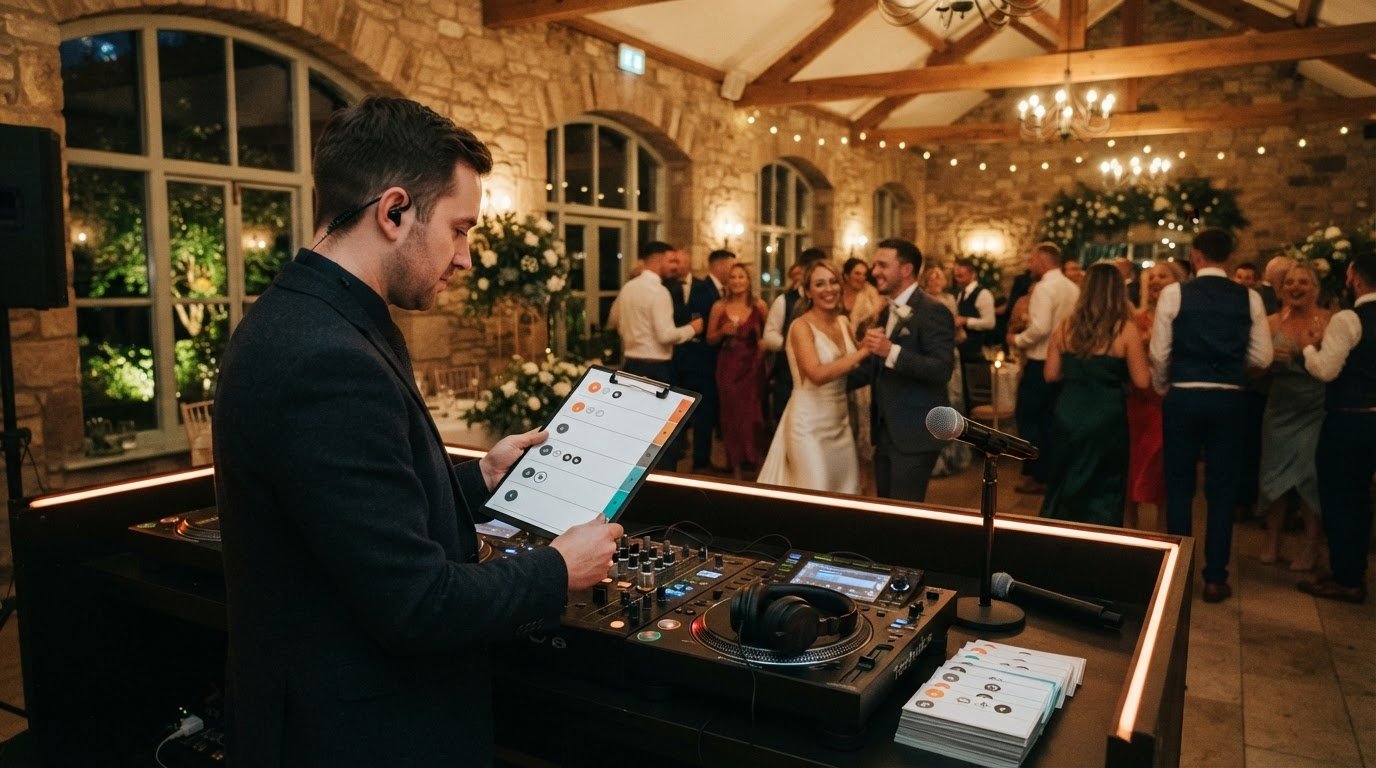
A shared running order helps the MC, DJ and performers create one connected celebration. Map key moments such as the couple’s entrance, speeches, cake cutting and dancing. Add the person responsible for each cue, plus a clear signal for when the next moment begins. This keeps announcements, music and performances from competing for attention.
Give each role a distinct job. The MC welcomes guests, introduces speakers and makes essential announcements. The DJ manages music transitions and responds to the room’s energy. A magician or singing waiter focuses on their performance, rather than interrupting an announcement or speech. Agree these responsibilities before the reception, so guests hear one clear voice at a time.
Use specific cues instead of vague instructions. For example, the MC can introduce the cake cutting, then signal the DJ once the couple is ready. The DJ can start the chosen track when the photographer has a clear view. If speeches run late, the MC can adjust the announcement order while the DJ keeps background music at an appropriate level.
Performers need a place in the schedule and a practical location. A stilt walker can welcome guests in an open arrival area, while a magician can mingle during a reception break. A fire dancer needs a suitable performance space and coordination with the venue. Singing waiters can be scheduled around meal service, rather than during speeches or an important announcement.
Share useful event details with everyone involved. Provide the couple’s preferred names and pronunciations, the order of speakers, music cues and any songs that should not be played. Tell performers when and where their segment fits. A concise run sheet gives the venue and entertainment teams the same reference, reducing confusion during busy changeovers.
Sound and sightlines matter, too. The MC needs a working microphone and space where guests can hear announcements. Keep the DJ’s setup clear of performance routes, guest seating and service areas. For a magician moving between tables, leave enough room to gather a small audience without blocking staff. Confirm who signals the start and finish of each performance.
Finally, agree on a simple backup plan for delays. If a speech runs over, the MC can shift the next announcement while the DJ maintains a comfortable atmosphere with suitable background music. If a performer’s slot changes, tell the venue contact and update the running order. Clear roles, cues and communication help each moment land cleanly, from the first welcome to the final dance.
A clear plan lets everyone focus on their part and gives guests a smooth sequence of moments. Wedding entertainment performers can include jugglers, stilt walkers, fire dancers, magicians, singing waiters and fortune tellers, depending on the wedding style. When selecting a performer, consider how their act fits the schedule and available space, then make the cue and handover clear to the MC and DJ. A brief check-in before the reception can confirm where the performer begins, how guests are directed and who communicates any adjustment. Keep the plan flexible enough to accommodate a change without confusing guests or interrupting another moment.
5. Introducing music early
Music doesn’t need to wait for the evening reception to shape your wedding atmosphere. A considered soundtrack during guest arrival, drinks or dinner can make the day feel celebratory from the start. Choose music that suits each moment: gentle instrumental tracks while guests find their seats, then brighter songs as conversations warm up. Introducing music early helps establish a lively atmosphere before dancing begins.
Start by mapping the day’s natural transitions. Note when guests arrive, move into the reception space and sit down for dinner. Choose a musical mood for each stage, rather than playing one uninterrupted playlist. For example, acoustic favourites can create a relaxed welcome, while soulful classics bring warmth to the drinks reception. Keep the choices connected so the day feels like one celebration.
Match the volume to what guests are doing. During arrival, people may be greeting relatives and finding their seats, so music should support conversation rather than compete with it. At dinner, keep the soundtrack comfortable for table talk. As the room shifts from dining to mingling, move towards more upbeat selections. These gradual changes build energy without making every moment feel like an invitation to dance.
Use songs with personal meaning as small emotional cues. A track associated with a family memory can make the welcome feel more individual. A favourite artist can also bring the couple’s personality through before formalities begin. Choose music that works for the setting and guest mix, then place special selections where people can enjoy them without missing a speech or announcement.
Share the schedule and music choices with the people managing the sound. Mark the transition from guest arrival to drinks, and identify when background music should pause for speeches. Agree on how the soundtrack changes after dinner. A clear plan prevents an abrupt switch from quiet conversation music to high-energy dancing and gives the evening a more natural build.
Consider the room as well as the playlist. A historic venue, hotel reception room or outdoor space can each create a different mood. Think about where guests will gather and whether music can be heard comfortably across the area. Keep important announcements easy to hear, and let the setting guide the style and energy of each selection.
For couples who want music woven into the welcome and early reception, plan your wedding music around those first guest arrivals, drinks and conversations. A purposeful early soundtrack gives guests a warm welcome, creates a shared atmosphere and sets the tone for the celebration that follows.
Stevie Dee Wedding DJ: Full Night Wedding DJ
Stevie Dee Wedding DJ can help bring your music plan together with a Full Night Wedding DJ. It’s a natural option if you want music shaped around your reception, from the transition into dancing through the rest of the evening. For announcements and introductions that flow smoothly alongside the music, a Professional MC Service can help keep the celebration on track.
Share your preferred songs, key moments and running order when discussing your wedding entertainment. These details help shape a music plan that reflects your tastes and the atmosphere you want to create. If you’d like to explore how a Full Night Wedding DJ could fit your celebration, contact Stevie Dee Wedding DJ or visit steviedeeweddingdj.ie.
Make the Celebration Feel Like Yours
The best next step is to choose the feeling you want guests to remember: joyful, relaxed, full of energy, or a little of each. Let that intention guide your music and entertainment choices, so the day feels personal rather than assembled from a checklist. Planning how to get the party started at a wedding becomes easier when every choice supports that shared vision. And for couples taking a breather from event preparations, exploring engaging audio shows from Ella Podcasts is a great way to unwind along the way.
Stevie Dee Wedding DJ offers a Full Night Wedding DJ for couples planning evening entertainment, a Destination Wedding DJ for celebrations abroad, and a Wedding Celebrant Service for couples shaping their ceremony. Each service can suit a different part of your wedding plans.
Ready to talk through the atmosphere you have in mind? Contact Stevie Dee Wedding DJ and take the next step towards a celebration that feels unmistakably yours.
Frequently Asked Questions
How should you plan the wedding reception timeline to build energy?
Build the schedule around the moments that matter most, then leave breathing room between them. To plan how to get the party started at a wedding, map guest arrival, meal service, speeches and the transition into dancing in sequence. Ask the venue when rooms or furniture need changing, and place those practical tasks between key moments. Mark the couple’s priorities clearly, so any adjustment protects the moments they most want to enjoy.
What wedding reception lighting and dance-floor setup help create a party atmosphere?
Use lighting to make the dance floor feel distinct while keeping nearby seating and walkways easy to navigate. Before the reception, identify the floor’s position, entrances, tables and any reflective surfaces that could create glare. Keep cables and equipment away from guest routes, and leave space for people to enter and exit comfortably. A bespoke lighting and sound setup can be tailored to the venue, helping the room feel cohesive as the evening shifts into dancing.
Comments