
How to Get Shy Guests on the Dance Floor Without Pressure
The most welcoming way to get shy guests on the dance floor is to make joining feel easy, not compulsory: lead by example, invite the bridal party to join at the two-minute mark of the first dance, and stay dancing for the first three or four songs. Familiar, upbeat music and short, playful activities can give guests another gentle nudge. The key is to invite, never pressure.
It’s understandable to want older guests to feel included without relying on music they don’t enjoy. A varied playlist can bridge generations, mixing familiar favourites with songs for the wider crowd. Smooth changes in tempo help keep the atmosphere moving.
In this guide, you’ll find practical ways to lead by example, use dance-offs and other light-hearted games, and adjust the music to the room. The result can be a welcoming celebration where guests join at their own pace, take a breather when they want, and still feel part of the fun.
Table of Contents
1. The couple leading by example
At a wedding reception, guests often take their cue from the couple. Join the dance floor early, smile, and enjoy the music rather than waiting for a packed room. That visible invitation makes dancing feel like part of the celebration, not a test of skill. If older relatives are nearby, a warm wave or shared step can make joining feel especially natural.
How can a host invite guests without pressure? Start with an open invitation, such as, “We’d love you to join us,” then keep dancing whether guests come over or not. Invite the bridal party to join the first dance at the two-minute mark. That gives hesitant guests familiar faces to follow, while leaving everyone else free to choose.
Make the opening feel welcoming, not staged. The couple can stay on the floor for the first few songs, showing guests that the celebration is underway. Choose familiar, upbeat tracks with an easy rhythm. A song guests recognise gives them a clear moment to step in, even if they only want to sway or clap along.
What should you avoid? Don’t call out a shy guest by name, pull someone onto the floor, or joke about their dancing. Public attention can turn a friendly invitation into pressure. Offer easy alternatives: guests can watch from their table, join for one song, or take a break whenever they like.
Leading by example also means keeping the atmosphere comfortable. Ask the wedding DJ to start with music that suits different generations, then build the energy as guests respond. Lighting can shift from dinner tones to brighter party colours when dancing begins, marking a change without demanding participation. The couple sets the tone; a relaxed first step, an inclusive invitation, and room to choose help more guests feel welcome.
2. Dance contests and interactive games
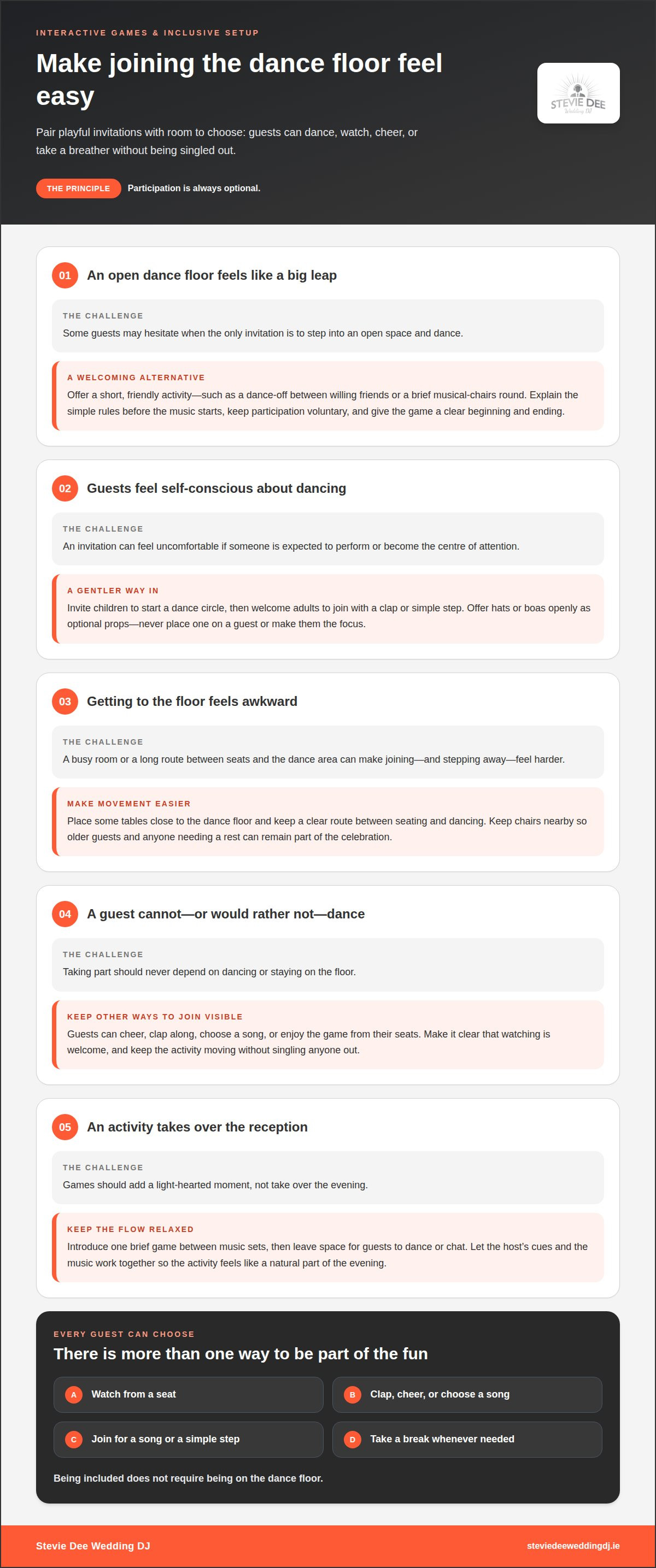
A short activity can give guests something to do besides stepping into an open space. Try a friendly dance-off between willing friends or a brief musical-chairs round, presented as a playful option rather than a test. Keep the rules simple, make participation voluntary, and explain the game before the music starts. A clear beginning and ending help energise the atmosphere without taking over the reception.
Choose an activity that gives different guests an easy entry point. For example, invite children to start a dance circle, then welcome adults to join with a clap or a simple step. Hats and boas can add a light-hearted prop, especially for guests who feel self-conscious about dancing. Offer them openly rather than placing one on someone or making a guest the centre of attention.
Seating and dance-floor layout can also make joining feel easier. Arrange some tables close to the floor, with a clear route between seats and the dancing area. Guests can watch, join for a song, or return to their table without crossing a busy room. Keep chairs nearby so older guests and anyone needing a rest can stay part of the celebration.
Guests who cannot or would rather not dance can still take part. Invite them to cheer, clap along, choose a song, or enjoy the game from their seats. Dancing should never be the price of inclusion. The host can make clear that watching is welcome, then keep the activity moving without singling anyone out.
For a smooth transition, the host can introduce one brief game between music sets, then leave space for guests to dance or chat. wedding reception entertainment can help bring hosting cues and music together, so activities feel like a natural part of the evening.
3. Reading the crowd and adjusting the music
Read the room through small signals, not just the number of people dancing. Guests turning towards the speakers, singing along, or tapping their feet show interest, even before they move. If conversation stays louder than the music or guests drift away, treat that as a cue to change your approach. These reactions can help you get shy guests on the dance floor without putting anyone under a spotlight.
For music, combine recognisable melodies with contrasting styles so different ages and tastes have a way in. A Motown favourite, a country chorus, or a current pop song can each connect with a different group. Familiarity helps, but the room’s response matters most: give a track time to land, then switch direction if guests aren’t engaging.
A DJ can build confidence by making the next choice feel predictable and welcoming. Use a clear change in style or tempo rather than abrupt stops, and avoid spotlighting individuals through requests or announcements. Guest requests can reveal what people want to hear, but choose songs that suit the atmosphere without interrupting a moment that’s already working well.
Start dancing once guests have finished the formalities and can leave their seats comfortably. This creates an opportunity before the evening feels too late, while giving the room time to settle after dinner or speeches. If the first response is quiet, keep the invitation open and adapt the next track rather than insisting that guests join immediately.
There’s no single playlist formula for how to get shy guests on the dance floor. A DJ who notices which styles get a response can move between musical generations, pace the changes, and make room for requests. Attentive music selection lets the celebration build naturally, with guests choosing when and how to take part.
Hosts can choose music to suit the occasion and varied tastes, or hire a DJ or band to read the crowd and select songs that keep people dancing. For a shy floor, choose performers who cater to different musical tastes. Familiar, upbeat songs and a mix of slower and faster tracks can help maintain momentum.
4. Dance-offs and conga lines
A conga line gives guests a shared action, so nobody needs to invent their own dance moves. Invite a few willing guests to lead, then let the line pass through an open area. Keep the route clear of chairs, tables, and serving staff. Guests can join at the back, follow for a short stretch, or clap along from the side.
For beginners, choose group dances built around repeated, easy-to-follow movements. A simple circle dance works well: step together, clap, and repeat while the music plays. A céilí can also suit an Irish wedding when guests are keen to join. Ask a confident caller to explain the basic steps first, and keep the pace comfortable for those taking part.
Make a dance-off playful rather than competitive. Invite two willing groups to take turns showing a simple move, such as a side-step or a spin. The host can encourage cheers for both sides instead of naming a winner. That keeps the focus on shared fun, not dancing ability, and lets shy guests join beside friends.
Timing matters. Introduce a conga line or circle dance after guests have settled into the evening, then use an upbeat, familiar song to cue the activity. Make the invitation clear: “Join the line if you fancy it, or cheer us on from your seat.” That gives everyone a way to take part without making the dance floor feel compulsory.
Keep the activity inclusive for older guests and anyone with limited mobility. A seated version can use hand claps, shoulder movements, or a simple wave in time with the music. Leave space around the floor, avoid pulling people into the line, and let guests step out whenever they like. A relaxed group dance can turn watching into joining, one comfortable movement at a time.
Stevie Dee Wedding DJ
Stevie Dee Wedding DJ can help shape a wedding celebration where music and hosting make joining in feel natural. A Full Night Wedding DJ can adapt the music to the room’s energy, while Professional MC services can introduce activities and invite guests to take part without putting anyone on the spot.
Share the kinds of music your guests enjoy, any songs that matter to you, and whether you’d like group dances or light-hearted games. These details help shape the evening and give shy guests different ways to join, from dancing to cheering along. For couples celebrating abroad, Stevie Dee also provides Destination Wedding DJ services.
To discuss your wedding entertainment and hosting, contact Stevie Dee Wedding DJ.
Make room for the celebration you want
A great wedding atmosphere isn’t measured by a crowded floor. It’s shaped by whether guests feel welcome to join, take a break, or enjoy the moment their own way. As you plan, think about what you want people to remember: the music, the host’s welcome, and the freedom to participate without pressure. That’s the heart of how to get shy guests on the dance floor.
Stevie Dee Wedding DJ brings that event experience together through Full Night Wedding DJ and Destination Wedding DJ services, alongside Wedding Celebrant Service. Share the tone you hope to create and the moments that matter to you. Those details can help shape an evening that feels personal, lively, and comfortable for your guests.
Ready to talk through your wedding plans? Contact Stevie Dee Wedding DJ and take the next step towards a celebration where everyone can feel part of the occasion.
Frequently Asked Questions
How do I get my older guests to dance without playing boring music?
Choose music with a recognisable groove and broad appeal, rather than labelling tracks as “old people’s music.” Pair a Motown or soul favourite with a contemporary song that shares its rhythm, so older relatives and younger guests both hear something inviting. Ask relatives for a favourite artist beforehand, then blend those requests into the evening’s playlist. Familiarity, not simply a slower tempo, can make the difference.
What happens if nobody is dancing at my wedding?
If nobody is dancing, give the room a moment instead of announcing that the floor is empty. Check whether guests are eating, listening to a speech, or waiting for a transition, then choose a natural restart point. A DJ can shift to a recognisable mid-tempo track and let willing guests gather nearby. Avoid calling out tables or treating a quiet spell as a problem.
What are fun icebreakers to get guests dancing?
Use a song-request moment as an icebreaker: invite each table to nominate a track, then play selected choices throughout the evening. Guests have a personal reason to listen for their song and can join friends who requested it. Another low-pressure option is a singalong chorus from a well-known favourite, with guests welcome to join from their seats or the dance floor.
Comments