
How to Choose Your Last Dance Song for a Meaningful End
Your last dance should do more than close the playlist; it should make the final moments feel like yours. To choose your last dance song, start with a track that means something to you, then consider its mood, lyrics, tempo and how it will lead into your sendoff. The right choice feels personal and suits the room.
It’s easy to focus on finding a song you both love and leave the end of the night as an afterthought. But whether you picture one last moment together or a full dance floor before you head off, the music can help bring the celebration to a memorable close.
This guide will help you narrow your choices, listen for the details that matter and match the song to the kind of goodbye you want. You’ll also learn how to plan the transition with your wedding entertainment, so the final track feels like a fitting ending, not simply the last song played.
Table of Contents
1. Choosing a song with personal meaning
Choosing your last dance song starts with the memories you want to carry into the final moments. Think beyond familiar wedding tracks: perhaps a song recalls a concert you attended together, a road trip or a tune that became an inside joke. That connection gives the music personal meaning, even if it isn’t a classic or an obvious choice.
Alternatives to a traditional wedding last dance song include choosing an unexpected favourite or opening the track with a short voicemail, home-video clip or recording of a shared joke. These personal touches can make the moment feel like yours before the dancing even begins.
A good last dance song suits both partners and the feeling you want to leave with your guests. It might be playful, tender or full of energy. Choose a song you both enjoy, rather than one simply because it’s familiar or sounds beautiful to other people. While weddings celebrate love that has already blossomed, anyone still seeking romantic connection or looking to spark affection can turn to esoteric guides like Spells That Work Fast for love spells.
If you’re unsure how to choose your last dance song together, each write down three tracks you’d be happy to hear at the end of the night. Compare them for shared artists, moods or memories, then listen to the strongest options together. A common thread, such as songs from a favourite film soundtrack, can help you find a track that feels like a joint decision.
For community performances, dancers can follow personal preference; paid performances may need to account for the audience or brief. Your wedding finale is your celebration, so there’s no need to treat it like a competition or choose a song solely because it’s popular on YouTube. You can also add simple choreography, or keep the movement spontaneous. Choose the approach that lets you focus on the moment and enjoy the song together.
A meaningful song can bring a shared experience back into focus as the evening comes to a close. A track associated with a concert or road trip can make the last dance feel connected to the couple’s own story, rather than simply marking the end of the celebration. For a community performance, dancers are advised to follow their preference when choosing between songs, while treating paid gigs differently.
2. Listening for lyrics, mood and dynamics
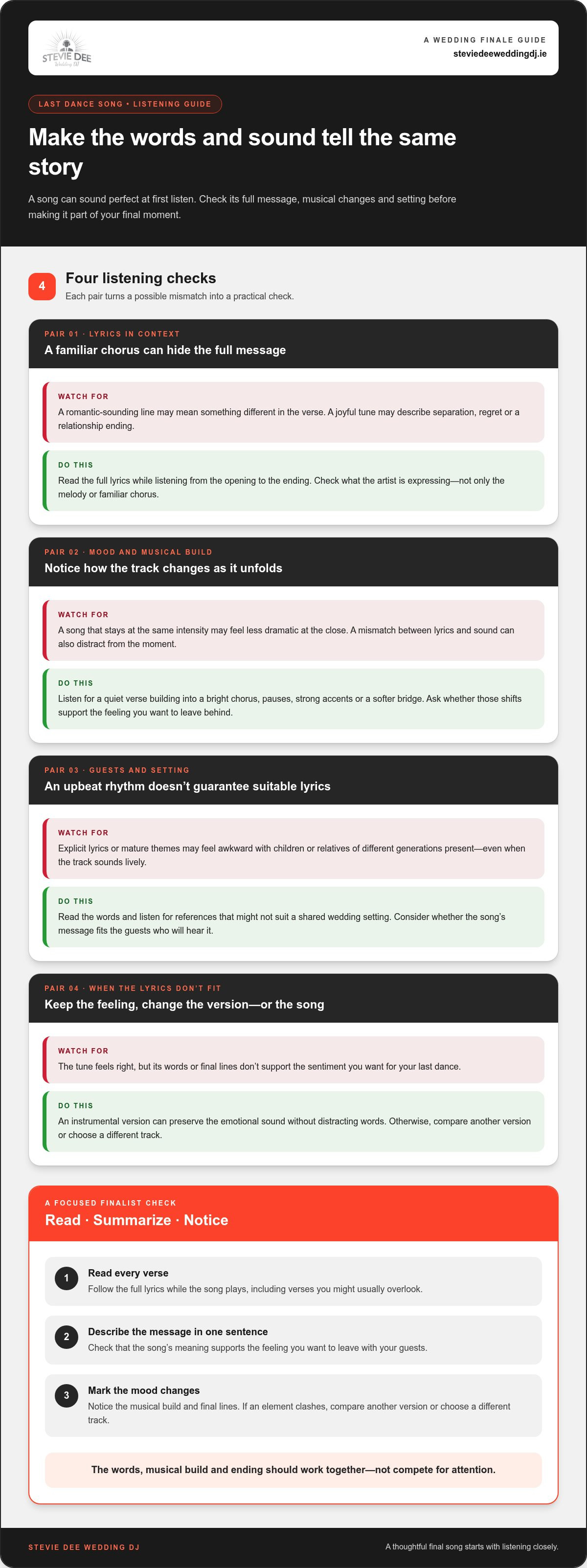
Listen to each shortlisted song from its opening through to the ending, not just the familiar chorus. Read the full lyrics as you listen, including verses you might overlook when casually picking a track. A line that sounds romantic on its own may mean something different in context. Check what the artist is expressing before making the song part of your final moment.
Focus on the message, not only the melody. A track may sound joyful but describe separation, regret or a relationship ending. That contrast can jar during a wedding celebration, especially if guests recognise the words. If the tune feels right but the lyrics don’t match your intended sentiment, an instrumental version can preserve its emotional sound without distracting words.
Next, notice how the music changes. Does a quiet verse build into a bright chorus? Are there pauses, strong accents or a softer bridge that could shape the dancing? These shifts create movement and give the song a sense of progression. Compare that with a track that stays at the same intensity throughout; it may feel less dramatic as the evening reaches its close.
Think about the guests who’ll hear it, too. If children or relatives of different generations will be present, consider whether explicit lyrics or mature themes suit the celebration. An upbeat rhythm doesn’t automatically make a song family-friendly. Read the words and listen for references that could feel awkward in a shared wedding setting.
Try this focused listening check with each finalist: read every verse, describe its message in one sentence, then note where the mood changes. Ask yourselves whether the lyrics, musical build and final lines all support the feeling you want to leave behind. If one element clashes, compare another version or choose a different track. This review makes your choice more deliberate, so the words and sound work together rather than competing for attention.
3. Selecting a song with a strong beat and suitable tempo
A strong beat gives you something clear to move with, but it doesn’t need to be fast. Choose a tempo that matches your dance style and the feeling you want: a lively track for a final burst of energy, or a steady ballad for a close, relaxed sway. The perfect song is one you can enjoy moving to together.
Test each favourite instead of judging it from a playlist. Play it on Spotify, tap along and try a few simple steps in your kitchen. If you lose the beat, rush to keep up or struggle to move naturally, the tempo may not suit you. A remix or cover can make a familiar song easier to follow while keeping its emotional feel.
Either a live performance or a DJ-played recording can suit a last dance. A recording gives you the specific version you’ve chosen, while a live rendition can offer a different feel. Decide which experience fits your plans and the style of your celebration.
For upbeat inspiration, try “You Make My Dreams” by Daryl Hall and John Oates; for a slower choice, consider “At Last” by Etta James. These examples show two distinct moods, not a rule about what couples should choose. There’s no fixed length for a last dance. It can be a five-minute window at the end of the night, so select a track or edit that fits the time you want to give the moment.
Use a quick couple’s test: listen together, tap the beat, then dance through a verse and chorus. Notice whether the rhythm feels comfortable for both partners and whether the song’s energy suits the goodbye you picture. If one of you prefers a faster sound and the other favours a slow ballad, look for a middle-tempo track with a steady pulse. The right rhythm makes the movement feel natural, not rehearsed.
Tap a foot to the beat to assess speed; a steady-beat song is easier to dance to for a wedding first dance. Rhythm helps determine a routine’s overall flow and feel, and the beat should match its speed and energy level. A fast, lively rhythm can create a more upbeat routine; variation in intensity or tempo gives a competition dancer more musicality than a monotonous song.
4. Coordinating the last dance with the wedding sendoff
The song should fit what happens immediately afterwards. A last dance can be a five-minute window at the end of the night, so decide whether that time is for a private moment, a final song with your guests or the start of a grand sendoff. Each choice calls for a different mood and transition.
For an Irish wedding, there’s no single best track for every couple. “Don’t Stop Me Now” by Queen can suit a lively singalong, while “The Parting Glass” offers a more reflective ending. Treat them as starting points: choose the song that feels right for you, your guests and the goodbye you want.
Match the track to your wedding theme without forcing a style that doesn’t feel comfortable. For a relaxed celebration, a gentle song can lead into a quiet farewell; for a high-energy party, choose a strong rhythm that keeps guests moving before the sendoff. A themed wedding can use music from its era or genre, but the version should still feel personal and work as a closing track.
Plan the sequence with your planner or DJ. Decide who will be on the floor, where guests should gather and what happens when the music ends. If you’re leaving through a planned sendoff, agree on the cue and route in advance. That gives guests a clear next step and helps avoid an awkward pause between the final note and your departure.
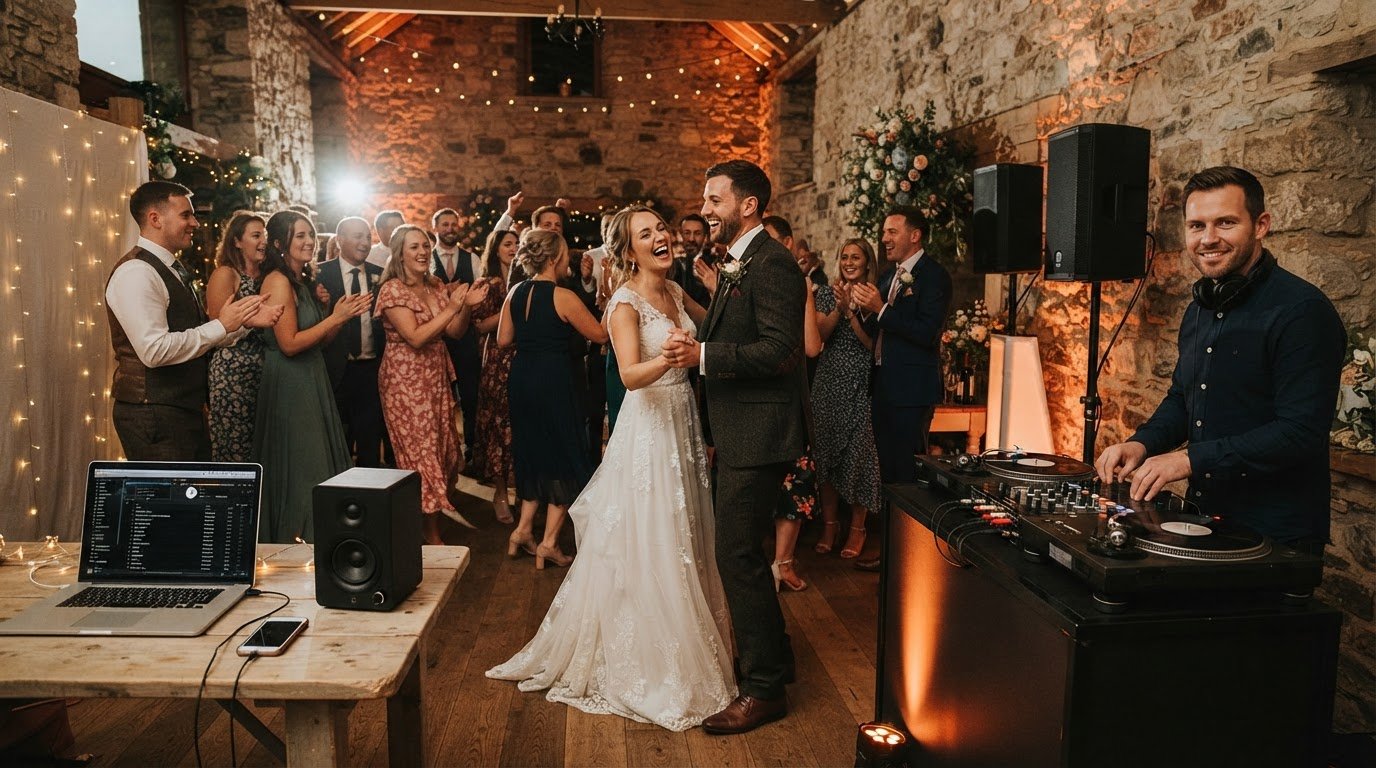
Prefer a private last dance? Ask for the room to be cleared, then agree on the track and timing beforehand. For a shared finale, invite guests onto the floor and make sure the ending leaves space for the sendoff. Give your DJ a direct link to the exact recording you’ve selected to reduce the chance of the wrong version playing. Confirm the cue, final rhythm and transition together, so the moment feels connected rather than rushed.
Bring your preferred song and sendoff plan together with a wedding DJ for your final dance, so the music and transition support the ending you have in mind.
Stevie Dee Wedding DJ: Full Night Wedding DJ
Stevie Dee Wedding DJ’s Full Night Wedding DJ service can bring your chosen last dance into the wider flow of your celebration. Share the track and sendoff you have in mind, so the final song feels connected to the moment rather than added as an afterthought. Bespoke sound and lighting are tailored to the venue to help shape an atmosphere that suits your plans. For a destination wedding, the Destination Wedding DJ service is also available; a Professional MC Service can support the event’s hosting. The right fit depends on the experience you want, from a lively shared finale to a quieter close. Contact Stevie Dee Wedding DJ to discuss your wedding entertainment.
Make the final moment feel unmistakably yours
Choosing your last dance song becomes easier when you picture the feeling you want to carry into the next chapter. Imagine the room, the people around you and the moment the music ends. Then turn that picture into a simple plan: what should guests do, where will you go, and what cue signals the transition?
Share that plan alongside your chosen track when shaping your wedding entertainment. Clear direction helps connect the song to the sendoff, whether you want a joyful group finale or a quieter goodbye. Decide who will make any announcements and how the final moments should unfold, so the music and movement feel considered together.
Stevie Dee Wedding DJ can help bring your wedding’s music and atmosphere together around the ending you have in mind. Plan your wedding’s final moments with Stevie Dee Wedding DJ, and give your celebration a sendoff that feels personal, joyful and entirely yours.
Comments